
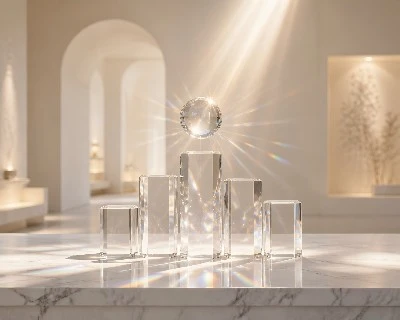

If you're sourcing glass containers for a food brand, private-label program, restaurant chain, or FMCG packaging line, the bar you need to clear is different from sourcing for general retail. Every container that touches consumables has to satisfy food-contact regulations - FDA standards in the United States, LFGB standards in Europe - plus shelf-stable packaging expectations across the supply chain.
We've been manufacturing food grade glassware for 22 years at our Zibo facility - supplying global food brands, private-label kitchen storage programs, and bulk food packaging contracts across 100+ countries. This guide is the same framework we walk our own B2B customers through: what to look for in food grade glass containers, which compliance standards actually matter, how to size programs correctly, and where buyers get caught by hidden costs.
If you're evaluating Chinese glass manufacturers for an FDA-approved or LFGB-certified program, this guide will save you weeks of qualification work.
1. What Is Food Grade Glassware and Why It Matters for B2B Buyers
Food grade glassware refers to glass containers specifically designed, manufactured, and tested for direct contact with food and beverages. The classification isn't a brand name - it's a regulatory status.
Three things make glass "food grade":
- Material composition - soda-lime or borosilicate glass with no harmful additives or surface treatments
- Manufacturing process - clean-room or controlled-environment production lines that prevent contamination
- Per-product testing - migration tests, lead and cadmium release tests, and shatter resistance validation per shipment
For B2B buyers, this classification matters because it determines:
- Which retailers and HoReCa chains will accept your packaging
- Whether your product clears customs in your target market (US, EU, UK, AU, JP all have separate requirements)
- Whether your brand carries product liability exposure if contamination occurs
Most general glassware won't pass food-contact audit. A decorative vase from a home goods catalog is not a food grade container, no matter how similar the glass composition looks. The difference is in testing, traceability, and documentation - not in the raw glass.
2. FDA and LFGB Compliance - The Two Compliance Standards Food Buyers Must Know
If you're shipping food containers across borders, you'll encounter two compliance regimes more than any other.
FDA 21 CFR (U.S. Market)
The U.S. Food and Drug Administration regulates food-contact materials under Title 21 of the Code of Federal Regulations. For glass specifically, the relevant sections cover:
- Extraction limits for lead and cadmium
- Migration testing methodology
- Good Manufacturing Practice (GMP) requirements
FDA compliance is verified through per-product third-party testing - typically SGS, Intertek, or Bureau Veritas. Each production lot should carry a test report traceable to raw material batches.
LFGB Section 30/31 (EU Market)
The German Food, Commodities and Feed Act (LFGB) sets stricter limits than FDA in several areas, particularly lead and cadmium release. LFGB compliance is required for any food-contact glassware sold in Germany and is generally accepted as the EU benchmark.
The critical difference for global buyers: LFGB-compliant glassware is FDA-compliant by default. The reverse isn't always true. If you're shipping to both U.S. and EU markets, build your specs to LFGB.
Per-Product Test Reports vs Generic Certificates. This is where many suppliers cut corners. A "generic certificate" is a single document covering a supplier's full product range. A per-product test report is specific to one SKU, one production lot, and one shipment.
For food brands with strict quality systems (Walmart, Costco, large restaurant chains), generic certificates don't pass supplier audit. Per-product reports are the standard. We ship a per-product test report with every order - full traceability from raw material batch to finished container.
See our certification documents →
3. Core Glass Container Types for Food and Beverage Applications
Food brands typically source five core container categories. Each solves a different problem in the supply chain.
Glass Mason Jars

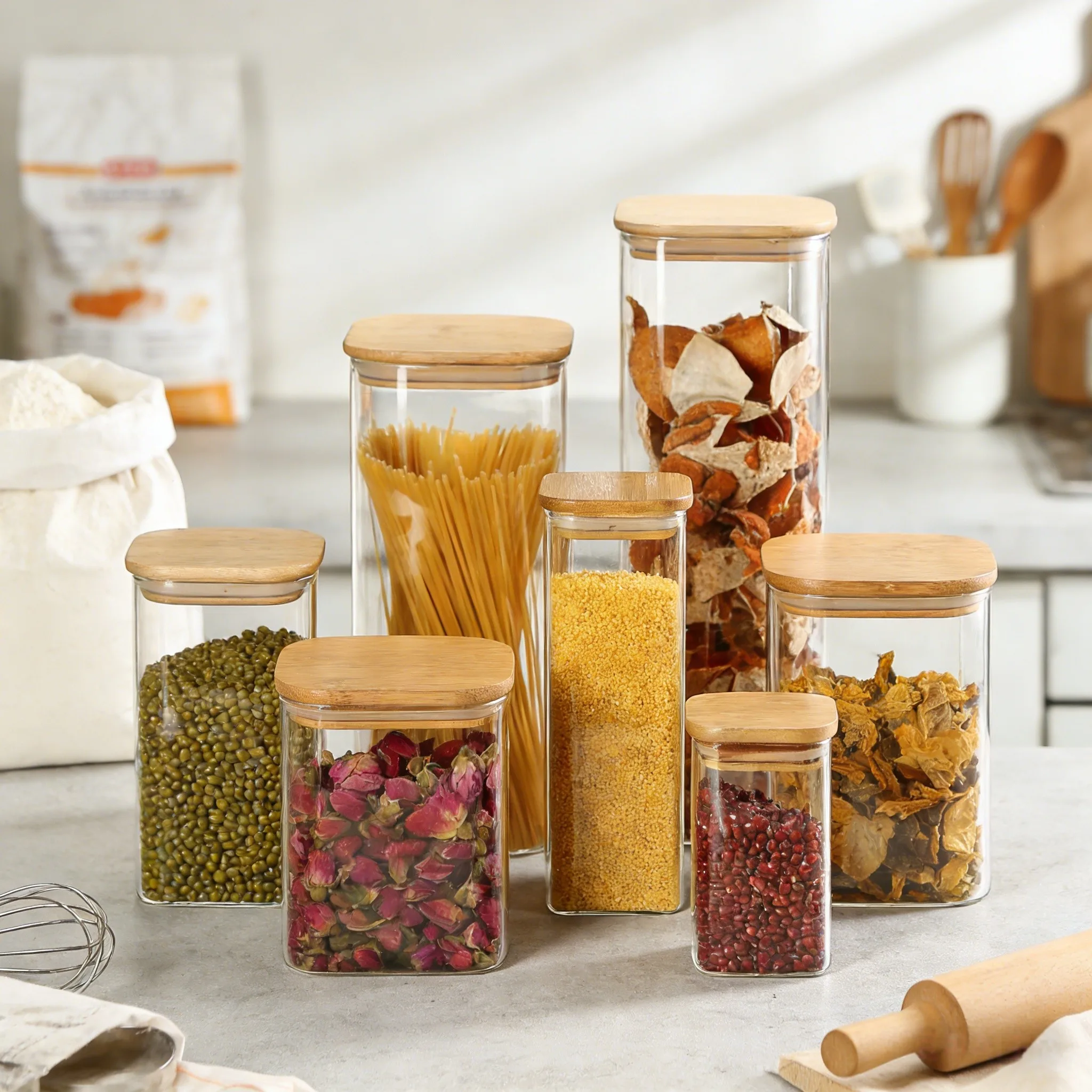
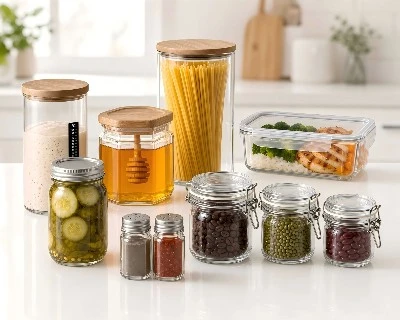
The workhorse of food packaging. Mason jars ship in 4oz, 8oz, 16oz, 32oz, and 64oz capacities with multiple lid finish options - bamboo, acacia wood, stainless steel, ceramic, cork, and tin. Wide-mouth threading works with standard canning equipment, which is why small-batch food brands (honey, preserves, spice blends, kombucha) standardize on them.
Browse our mason jar catalog →
Glass Jars with Lids
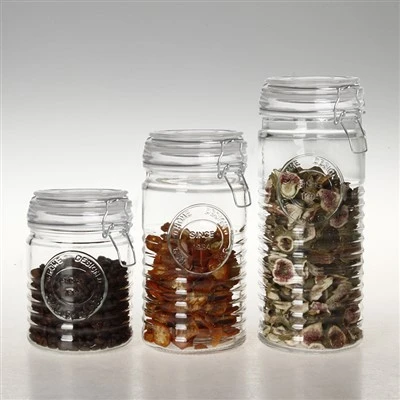
For premium food packaging and private-label programs. Capacities from 100ml to 1L are the standard range for gourmet sauces, condiments, and small-batch retail packaging. Airtight lid compatibility is the technical specification that separates a food-grade jar from a decorative one.
Glass Beverage Dispensers
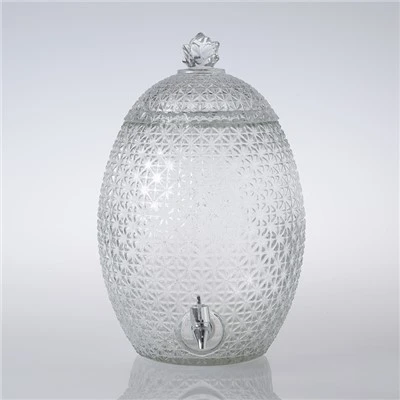
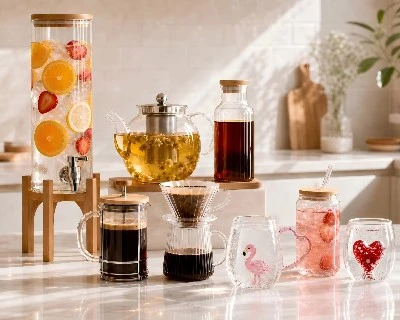
For restaurants, cafeterias, beverage stations, and event catering. Commercial-grade dispensers hold 4L-8L with stainless steel spigots designed for 200+ refills per day. We've supplied hospitality bottling programs with bulk dispenser orders for over a decade.
Glass Decanters
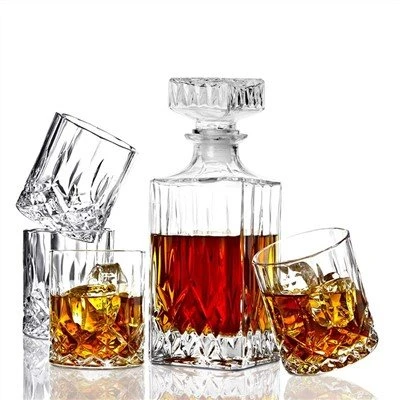
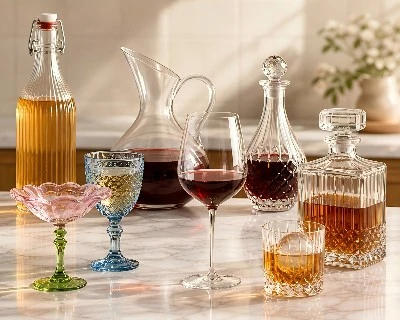
For premium beverage service - cold-brew coffee, infused water, juice service, and bar programs. Hand-blown lead-free glass in 750ml-1.5L capacities with heavy bases for stability in high-traffic service environments.
Glass Bottles and Tumblers

For water service, juice bottling, cold brew, kombucha, and infused beverages. Our glass drinkware line covers tumblers from 200ml to 1L, plus matching glass bottles with airtight seals for shelf-stable commercial programs.
What's NOT Food Grade Glassware. For clarity, the following don't qualify as food grade containers even if they're made of glass:
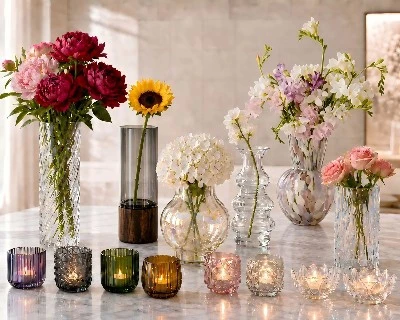
- Decorative vases (not designed for food contact)
- Candle holders (interior surfaces not food-safe tested)
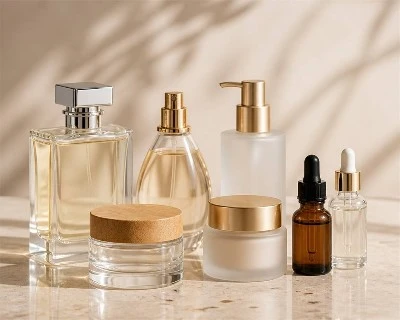
- Perfume bottles (designed for cosmetic contact only)
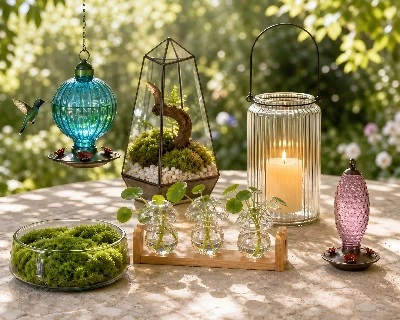
- General home decor pieces
If your supplier can't produce per-product test reports for the specific SKU you're sourcing, it's not a food grade container.
4. Material Composition and Food-Safe Construction Standards
Two material families cover most food grade glassware.
Soda-Lime Glass
The default for approximately 90% of food grade glass containers. Soda-lime is the most cost-effective food-safe material, with proven performance across hot-fill, cold-fill, and pasteurization processes. It does have a lower thermal shock tolerance than borosilicate - typically a 40°C delta versus 160°C for borosilicate.
For most food programs (sauces, preserves, dry goods, beverages at ambient temperature), soda-lime is the correct specification.
Borosilicate Glass
Used when thermal shock resistance matters: hot-fill applications above 90°C, freezer-to-oven transitions, commercial dishwasher cycles in foodservice. Borosilicate carries a price premium (typically 2-3x soda-lime) but eliminates a category of breakage that soda-lime can't survive.
For most retail food packaging, borosilicate is over-specified. For commercial kitchen or foodservice programs with aggressive thermal cycling, it's the right choice.
Lead-Free and BPA-Free
All food grade glassware from legitimate manufacturers is lead-free and BPA-free by definition. Lead was used historically in glass decoration (crystal glassware) but is restricted in food-contact applications globally.
If your supplier uses the phrase "BPA-free glass," that's a marketing signal that they're not clear on what BPA is - BPA is a plastic concern, not a glass concern. Look for suppliers who understand that lead-free and food-safe are the relevant standards for glass specifically.
5. Sizing, Capacity, and Lid Compatibility for Commercial Programs
Sizing is one of the most overlooked specs in food packaging sourcing.
Capacity Standardization
U.S. buyers typically specify capacities in fluid ounces. EU buyers specify in milliliters. Asian buyers specify in milliliters but often with non-standard capacity brackets. The supplier you choose should be able to manufacture to your target market's standard capacity brackets.
Our standard capacity range covers:
- 4oz / 8oz / 16oz / 32oz / 64oz (U.S. standard for mason jars)
- 100ml / 200ml / 500ml / 750ml / 1L (EU/international standard)
- 4L / 6L / 8L (commercial beverage dispensers)
Lid Compatibility
This is where many B2B programs fail at qualification. A jar that tests clean for food contact can still fail in production if the lid system doesn't match your filling equipment.
Common lid compatibility specifications:
- Continuous thread (CT) - most common for mason jar formats
- Lug (twist-off) - common for sauce and preserve jars
- Cork + wire bail - premium / artisanal positioning
- Pump or sprayer - for syrup and oil bottles
- Spigot + lid - for beverage dispensers
If your filling line uses a specific lid format, the supplier must be able to source or manufacture that lid system - not just the glass jar. We carry 12 lid finish options across our mason jar line and source matched lids for all capacity ranges.
6. Decoration and Private-Label Branding for Food Brands
Food brands rarely sell plain glass containers. Most retail and restaurant programs require decoration.
Five Decoration Techniques
We manufacture in five in-house decoration techniques:
- Spray color - full-container color coating, Pantone-matched, dishwasher-resistant
- Screen printing - single or multi-color logo and text printing, food-safe inks
- Laser engraving - permanent frosted etching, no ink contact with food
- Hot stamping - metallic foil application (gold, silver, copper)
- Decal application - multi-color labels for complex branding
Five in-house decoration techniques cover most food brand private-label requirements
Most food brand programs combine two techniques - spray color for base + screen printing for logo, for example. This gives you color consistency and brand recognition across the SKU range.
Pantone Color Matching
For private-label programs, Pantone color matching is non-negotiable. We match to Pantone codes across 100+ in-house color cards, and can develop custom colors for minimum order quantities of 50,000 pieces.
7. Quality Control, Testing, and Lot Traceability Standards
Quality control is where food grade glass suppliers differentiate themselves.
Per-Product Testing Requirements
Every food grade glass SKU should ship with:
- Migration test report (FDA 21 CFR or LFGB Section 30/31)
- Lead and cadmium release test report
- Visual defect inspection report
- Dimensional inspection report
- Lot number and production date traceability
Lot Traceability
In the event of a contamination incident or recall, lot traceability is your legal protection. Every shipment should carry a lot number that ties back to:
- Raw material batch (sand, soda ash, limestone source)
- Furnace run date
- Forming line and shift
- Quality inspection batch
We maintain lot traceability from raw material to finished container for every production batch. This is documented in our per-shipment reports.
AQL Standards
Most food brands accept AQL (Acceptable Quality Level) of 1.0-2.5 for cosmetic defects and 0.65-1.0 for critical defects (cracks, contamination). Your specification should specify AQL by defect class. A supplier that can't commit to a specific AQL isn't running the quality system you need for food contact.
Production Scale and Design Support
Quality control at food grade glass scale requires real production capacity behind it. Our Zibo facility runs 1.2 million pieces daily across 8 production lines (6 automated + 2 hand-blown workshops), with 890 workers including 40+ in-house designers and engineers running our IPD (Integrated Product Development) framework. For food brand programs, that translates into the production volume for FMCG launches plus the design bandwidth to develop custom shapes and Pantone color matches within tight launch windows.
8. Sustainability, Recyclability, and the Circular Packaging Argument
Glass has structural sustainability advantages that food brands are increasingly leveraging in marketing.
100% Recyclable, Infinitely
Glass is 100% recyclable without quality loss. A glass container can be recycled into another glass container infinitely. This is the strongest sustainability claim available for any food packaging material.
For brands running closed-loop retail programs (refillable containers, return-and-refill), glass is the only material that survives the washing and sanitization cycle at scale.
Brand Story Differentiation
Food brands that switch from plastic to glass packaging cite three customer-facing benefits: taste preservation (no plastic taste transfer), health perception (no plastic chemical concerns), and premium positioning (glass reads as quality at retail). If you're pitching a glass packaging switch to retail buyers, these three benefits are the framing that lands.
9. Pricing Structure, MOQ, and Total Cost of Ownership for B2B Buyers
Glass pricing looks more expensive than plastic per unit. The total cost of ownership tells a different story.
MOQ Structures
Standard food grade glass containers from our production lines start at MOQ 1000 pieces for stock food-safe items. Custom shapes or Pantone-matched colors carry MOQ 50,000+ pieces depending on complexity. For first-time buyers, the standard 1000-piece MOQ for stock items is the right entry point - you can qualify the supplier without committing to a full production run.
Per-Unit Pricing Tiers
Volume pricing tiers in our FMCG programs:
- 50,000 pieces - baseline pricing
- 100,000 pieces - 10-15% discount
- 500,000+ pieces - 20-25% discount
These tiers assume standard catalog SKUs. Custom molds or decoration carry different tier breakpoints.
Hidden Costs Buyers Often Miss
Five costs that surprise first-time China sourcing buyers:
- Decoration sampling fees - typically $200-500 per sample for custom colors
- Lid sourcing minimums - lid suppliers often have higher MOQs than glass suppliers
- Custom mold costs - $5,000-15,000 per mold for a new shape
- Sample shipping - DHL air freight from China, $80-200 per sample
- Reorder lead time variance - stock items 30-60 days, custom items 60-90 days
Budget these into your total cost comparison, not just per-unit pricing.
Total Cost Comparison: Glass vs Plastic
For a typical 16oz food jar:
| Cost Factor | Glass | Plastic |
|---|---|---|
| Per-unit price | $0.40-0.60 | $0.15-0.25 |
| Brand premium achievable | +20-40% retail | baseline |
| Customer retention lift | +5-15% | baseline |
| Recyclability | 100% | limited |
| Cold-chain thermal performance | superior | limited |
For premium food brands (artisan, organic, gourmet), the brand premium and retention lift typically offset the per-unit cost difference within 6-12 months of launch.
10. Selecting a Food Grade Glassware Manufacturer - Decision Checklist
A 12-point qualification checklist based on the qualification work we see food brand procurement teams running.
Documentation (4 items)
- Per-product FDA test report (not generic certificate)
- Per-product LFGB test report (if shipping to EU)
- ISO 9001 or equivalent quality management certification
- Audit-ready facility documentation (BSCI, Sedex, or equivalent)
Manufacturing Capability (4 items)
- Daily production capacity ≥ 500,000 pieces (for FMCG programs)
- In-house decoration lines (spray, screen print, laser, hot stamp, decal)
- Pantone color matching capability (≥100 in-house colors)
- Mold design and engineering team for custom shapes
Supply Chain Reliability (4 items)
- Free sample program with 7-10 day sample delivery
- Free prototype or sample (custom orders negotiable per case)
- Per-shipment QC documentation
- Lot traceability system with raw material to finished container tracking
If a supplier checks all 12 boxes and offers per-product testing rather than generic certificates, they meet the qualification bar for serious food brand programs.
Start your qualification with our team →
11. Frequently Asked Questions
FDA approved vs LFGB certified - what's the difference for global food brands?
FDA compliance covers U.S. market food-contact regulations under 21 CFR. LFGB compliance covers EU market food-contact regulations with stricter limits on lead and cadmium release. If you ship to both markets, build specs to LFGB - it's accepted in the U.S. but FDA compliance alone won't clear EU customs.
What's the typical MOQ for food grade glass containers from China manufacturers?
Standard catalog food grade containers start at MOQ 1000 pieces. Custom shapes (new mold required) start at MOQ 10,000-20,000 pieces. Custom Pantone color matching starts at MOQ 50,000 pieces.
Are glass containers dishwasher safe for commercial restaurant use?
Yes - when manufactured to commercial-grade specifications. Our food grade glassware passes 100 commercial dishwasher cycles without clouding, etching, or color degradation. Thermal shock resistance from -20°C to 130°C supports typical restaurant dishwashing cycles.
Can food grade glass be customized with private-label branding for retail?
Yes. Our five in-house decoration techniques support full private-label programs: spray color for base, screen printing for logo, laser engraving for permanent branding, hot stamping for metallic effects, and decal application for complex multi-color designs. Pantone color matching across 100+ in-house colors.
12. Get a Quote for Your Food & Beverage Project
Whether you're launching a new food product, scaling a private-label program, or rolling out across retail and restaurant channels, we manufacture food grade glassware built for FDA and LFGB compliance and FMCG volume.
Contact our food & beverage team:
- Email: glassware@zgsglass.com
- WhatsApp: 8615964465498
- Phone: +86 13105330788
Published: 2026-09-01 | Last updated: 2026-09-01 | Category: Industries > Food & Beverage Glassware